
Views: 37 Author: Site Editor Publish Time: 2026-02-19 Origin: Site
In industrial production environments where high temperatures, heavy wear, and continuous mechanical loads coexist, contact points within equipment often face multiple challenges at the same time. Direct metal to metal contact can easily lead to surface scratches, deformation, or excessive wear. Meanwhile, conventional rubber materials or standard felt products tend to degrade quickly when exposed to sustained heat or long operating cycles.
It is under these demanding conditions that kevlar pads have become an increasingly preferred protective solution in high temperature manufacturing, aluminum processing, and industrial equipment protection systems. Their value does not lie in replacing every material on the production line. Instead, kevlar pads are designed to provide stable, predictable protection at critical contact interfaces where traditional materials struggle to perform reliably.
This article examines what kevlar pads are, how they work, and where they are typically applied in industrial settings, from an engineering and application focused perspective.
Kevlar pads are industrial protective pads or cushioning components manufactured primarily from Kevlar aramid fibers. Unlike Kevlar composite materials used for structural reinforcement, kevlar pads are engineered specifically for interface protection, surface contact control, and resistance to heat and abrasion.
In industrial equipment, kevlar pads are commonly installed at:
Contact points between products and machinery
Support or guiding positions exposed to high temperatures
Workstations where friction reduction or surface protection is required
Their primary purpose is to protect both equipment components and processed materials while maintaining operational accuracy.
Kevlar is widely recognized in industrial applications due to its balanced combination of mechanical and thermal properties, including:
High tensile strength
Kevlar fibers provide excellent strength to weight performance, allowing kevlar pads to maintain structural integrity under load.
Excellent heat resistance
Kevlar remains stable in elevated temperature environments and does not soften or degrade rapidly during continuous operation.
High abrasion resistance
The inherent wear resistance of Kevlar enables kevlar pads to withstand repeated contact and sliding motions over extended service periods.
Dimensional stability under load
Even when exposed to heat and pressure simultaneously, Kevlar maintains controlled deformation behavior, which supports consistent equipment performance.
These properties make Kevlar particularly suitable for pad based protective applications rather than purely structural uses.
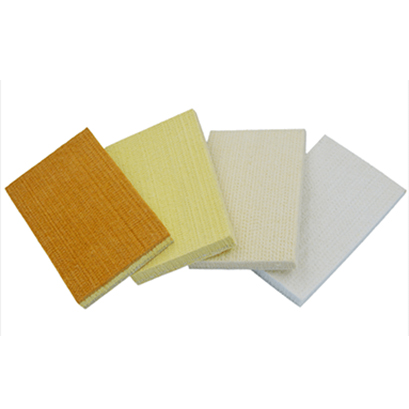
In high temperature industrial equipment, kevlar pads are often used to separate heat sources from sensitive components. Their function is not complete thermal insulation, but rather thermal moderation. By maintaining material stability and limiting heat transfer at contact interfaces, kevlar pads help protect components that require dimensional accuracy or surface quality stability.
This function is especially important in continuous production environments.
In applications involving relative motion or repeated contact, kevlar pads effectively reduce friction while preventing direct abrasive contact between surfaces. This capability is particularly valuable in:
Processes with strict surface quality requirements
Automated equipment operating around the clock
Production lines where frequent shutdowns for part replacement are impractical
Beyond thermal and wear protection, kevlar pads also contribute to load distribution. Properly designed pad thickness and structure help spread localized pressure, reducing stress concentration on equipment components and minimizing fatigue risks during long term operation.
In high temperature manufacturing environments, kevlar pads are widely used as support, separation, or buffering materials. Their ability to retain stable performance under heat makes them more reliable than conventional materials in demanding operating conditions.
During aluminum processing and handling, product surfaces are relatively soft and vulnerable to both heat and mechanical contact. In these applications, kevlar pads are primarily used to:
Protect aluminum surfaces from scratches and pressure marks
Maintain stable contact at elevated temperatures
Reduce the risk of material adhesion during handling
Kevlar pads are also used in mechanical protection systems to reduce vibration, friction, and accidental impact. They are especially well suited for automated and continuous operation equipment where stable performance and minimal downtime are critical.
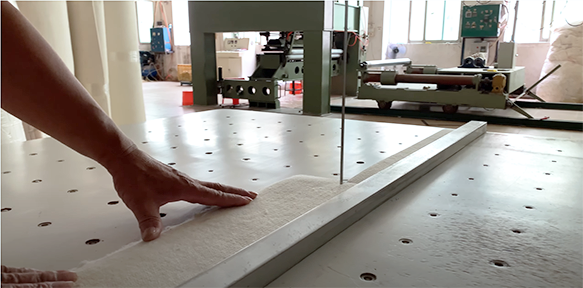
Compared with rubber pads, kevlar pads offer superior performance in high temperature and high wear environments. Rubber pads, however, remain effective in low temperature applications where vibration absorption is the primary requirement.
Material selection should always be based on actual operating conditions rather than a single performance parameter.
Compared to standard felt pads, kevlar pads are better suited for high load and high temperature conditions. Standard felt products offer cost advantages in lower temperature, lower pressure applications, while kevlar pads are designed for performance driven use cases.
When selecting kevlar pads for industrial applications, several factors should be evaluated together:
Actual operating temperature
Contact pressure and mechanical load
Surface material and surface condition
Pad thickness and structural design
Whether composite layering with other materials is required
Proper selection often has a greater impact on performance than material choice alone.
From a long term operational perspective, kevlar pads help improve equipment stability, reduce maintenance frequency, and protect product surfaces under demanding conditions. These advantages explain their growing adoption across high temperature manufacturing and aluminum processing industries.

Kevlar pads are not a universal solution for every industrial scenario. However, in environments characterized by high temperature, heavy wear, and continuous mechanical load, they provide a stable and predictable protective option.
For manufacturers evaluating material upgrades or equipment optimization, understanding how kevlar pads function and where they perform best is a critical step toward making informed technical decisions. Email: toby@gdcalm.com